The Elephant in the Museum

I am totally committed to the idea of teaching children meaningful connections to literature, math, history, culture, art, music, dance, athletics, and the rest, and knowing that the “fundamentals” will follow from that. I am totally committed to the idea that the future will require independent, emotionally wise, problem solvers. We are taking time away from the arts to teach long division to students with calculators on their phones. We are taking time away from classes teaching physical fitness to teach students cursive who’ll be keyboarding to communicate.

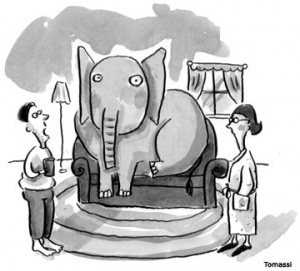
It is the elephant in the room. Art isn’t something we should teach when time permits. It is the core of a progressive, emotionally mature education. It serves the students incredibly well. It would no doubt be of comfort to our children to know that Mozart lived through the American Revolution and saw the beginning of the French Revolution. Beethoven lived and created through both and the global conflagration that was the Napoleonic Wars. This period saw regular devastation and a see-sawing of German fortunes on a scale unknown today. Understanding how life and art coexist and give meaning to lives in turbulent times is something our children need to know.

Teaching Art

Impressionism is “real” enough to be recognizable by students. Yet it is different enough that it clearly challenges the viewer to think differently, to adopt a different perspective. At least for me, it’s the most approachable type of art. I understand the break they are making with tradition and I am persuaded by the esthetics they create. It is challenging enough to freeze me into contemplation but familiar enough to be comfortable. It is also something students can emulate easily. I have seen amazing versions of Starry Night and Vase with Twelve Sunflowers done by preschoolers at my wife’s school. A room filled with Starry Nights done by 4 year olds is breathtaking.

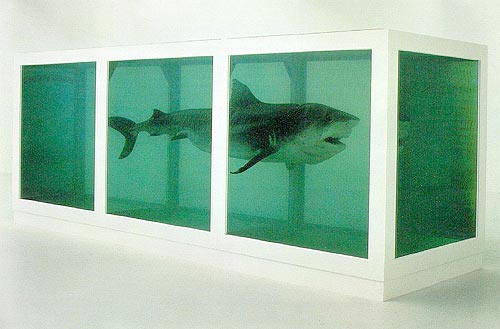
The area I would move gingerly as a teacher is contemporary art. I cannot help feeling that much of it is a joke at my expense and I remember deep resentment when I was exposed to it in the 70’s. This leads to two thoughts: One, when presenting modern art it is critical to create a cultural context, an understanding of the process of art in all it’s glory, human flaws, economic aspects, and experimentation. Second, and more important, we each (and our students each) need to be allowed to find value where we do. If we don’t, we risk ending up like Mr. Karp in A Chorus Line. We can only encourage students to explore the possibilities of art, not impose our meanings (or even expectations) on them.

Modern Art

I think we can all find ourselves unpersuaded by art if we don’t see the point. I wrote an entire post on my lack of appreciation of a modern art piece appropriately called “Red Plank,” on display at the Art Institute of Chicago. I wrote more, about trying to see art as an artist’s communication. Honestly, I still don’t get Red Plank, try as I might. I am comforted by a quote I read in a recent book on modern art. According to the book, Jerry Saltz from the Village Voice said “85% of new contemporary art is bad.” The problem is, he continues, is while most of the art world agrees with the percentage, they just can’t agree on which is the good 15%.

Notwithstanding this, I think it’s important to try to see the unique perspective in each art piece. I think this is one of the important things art can contribute to a child’s education. It challenges us to see life from different perspectives. Like philosophy, it can make us question and force us to develop the ability to adopt different perspectives. In particular, the impressionists were interested in light and color. That is what they try to capture. They show us a way to see objects that is not the normal way we see them. It reminds us that there are other ways to see things. This is good for adults, and even better for children. The children almost certainly do see things differently, having not yet been training into conformity. Art can be an important link to their unique personality and their ability to sustain and embrace that personality.

Constructivist Assessment

It is well understood that assessment is an important part of education.  What is less agreed upon is what is the appropriate purpose of assessment.  In traditional education, assessment is usually linked to the social sorting purpose of education. Specific standards are created in specific subjects and students are tested and scored according to how well they demonstrate that they meet those standards.  This is philosophically consistent with the teacher-centered traditionalist approach to teaching. However, assessment must change not only its form but also its affect to match the philosophical needs of constructivist education.

Constructivist education is about the students constructing their own knowledge. Progress towards the learning goals needs to be measured generously and in support of each child’s success. This has two specific implications. First, the measures of success need to be changed. Rather than tracking performance as if education was a contest, performance needs to be tracked in terms of the student’s proximity to success. Rather than the traditional “Proficient,” “Advanced,” “Below Basic,” etc., more student centered assessment results should be used. “Not there yet,” “On Target,” and “Above and Beyond” captures the intent of the assessment more clearly. Second, constructivist education believes that every child should succeed and therefore assessment results should support that belief. Constructivist assessments are there to discover what a child has mastered and in what areas further work is needed. That is how the results should be presented and the affect they should carry. Constructivist assessments must always be in support of the child’s learning.

This all has implications for grading. It hardly makes sense to hold an expectation of each child’s success and then rank him or her on a scale of 0 to 100. A teacher standing apart, ranking her students, destroys the emotional foundation of constructivism. Like the assessments themselves, summative results should reflect broad learning outcomes like “Not Quite There,” “On the Mark,” and “Above and Beyond.” Written or verbal assessment should emphasize both the student’s successes and areas where collective effort needs to be made to achieve learning goals. It is critical that the student is seen as the creator of his or her learning and that the teacher is seen to be in complete support of that achievement. Implementing constructivism in a modern classroom is challenging and assessment policy is among the biggest challenges. On the other hand, a classroom in which assessment is fully constructionist will true the entire classroom culture to constructivism and ease that challenge.

Metacognition

How does metacognition support the development of problem-solving strategies in children?

Van de Walle, Karp, & Bay-Williams (2010) define metacognition as, “Conscious monitoring (being aware of how and why you are doing something) and regulation (choosing to do something or deciding to make changes) of your own thought process” (p. 46). They continue, “Good problem solvers monitor their thinking regularly and automatically” (Van de Walle et al., 2010, p. 46). They say this because, “Students can learn to monitor and regulate their own problem solving behaviors and those who do so show improvement in problem solving” (Van de Walle et al., 2010, p. 46). And this is important to us as teachers because, “There is evidence that metacognitive behavior can be learned” (Van de Walle et al., 2010, p. 46). So, to recap, metacognition is a skill that can be learned (and therefore can be taught) which improves students’ critical problem solving abilities by aiding them in monitoring their own internal mental processes.

I particularly like George Polya’s four-step problem-solving process. Van de Walle et al. (2010) describe it this way:

1. Understanding the problem. Briefly, this means figuring out what the problem is about, identifying what question or problem is being posed.
2. Devising a plan. In this phase you are thinking about how to solve the problem. Will you want to write an equation? Will you want to model the problem with a manipulative? (See the next section, “Problem-Solving Strategies,” for more on this one.)
3. Carrying out the plan. This is the implementation of your plan.
4. Looking back. This phase, arguably the most important as well as most skipped by students, is the moment you determine if your answer from step 3 answers the problem as originally understood in step 1. Does your answer make sense? (p. 42).

I like this structure and plan to teach it to my students.

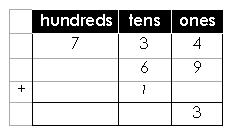
However, this question echoes with the ongoing conversation in my head about constructivism versus test prep teaching. There is not an ounce of metacognition required for drill and kill. I watch students dutifully trying to copy what they’ve been taught about regrouping. They move the “1” to the ones column and reduce the ten’s column but I wonder how many they truly understand the logic. I don’t know how just knowing the procedure of regrouping will help these children as they grow up. Soon, they’ll have calculators and won’t need to regroup in this way. But I think it’s good to be able to do simple math in one’s head and that comes from being fluent in “making 10’s,” which comes from being very clear on regrouping as borrowing 10 ones from the tens.

Metacognition would allow the students to realize that they don’t know WHY they’re doing something. This would allow them to ask, “Why?” However, if we teach children to be an informed consumer of their own education, all of our lessons need to be able to withstand the scrutiny.

I continue to feel the talons of constructivism grip me. It’s not something one can embrace partially, it would appear…
Be Nice. Work Hard.

I did my classroom observation last week in the room of a legendary teacher. The mature behavior of his 5th grade students is famous. Classroom management is an area of particular interest for me so I was excited to see what his class looked like for an entire day. It was extraordinary. At 7:10 am, during pre-school music practice, I was immediately offered a bottle of water by one student, then a minute later, by another. The students were quiet and respectful throughout the day – without exception. To be sure, when they played baseball first period, they were normal kids – except that they were uniformly supportive of their teammates and their opponents. It was extraordinary how much time was saved and how much less tiring the day was (especially because the day was 7 am to 4 pm…).

The reason I bring this up here is that taking risks and making mistakes is such a critical part of learning. Creating an atmosphere where that can safely take place is perhaps the hardest thing for a teacher to do. Even extraordinary teachers often don’t intrude on (or know about) the subtle interactions between students. I am coming to believe that the classroom atmosphere has to be something that follows my students 24 hours a day. While this sounds over the top, a classroom can’t be safe if the students are mocked for their in class mistakes away from my sight. Of course, such an intention can’t be fulfilled through coercion. I have no reach beyond the classroom. However, it can be achieved (as demonstrated above) with the proper teaching as the school year begins and reinforcement as it proceeds.

The classroom I observed has a motto, “Work hard, be nice.” Nice is a core value reinforced everyday. Students who misbehave while other students are talking are asked, “You’re acting as if Jorge doesn’t matter. Does Jorge matter?” Harsh, but very true and very effective. As for discipline, the teacher has a simple rule: the class activities have to be interesting enough such that not being allowed to participate is punishment enough. The teacher holds himself and all his students to an extremely high behavioral (and academic) expectation. It works beautifully.

In his class, there is no issue pursuing questioning with struggling students. There is no issue when students make mistakes. In fact, he said at one point, “Thank you for getting it (a math problem) wrong and allowing us to learn with you.”

I think the ultimate testament of how effective his strategy is came in reviewing the answers to the same math quiz. When the teacher asked if anybody had gotten a particular problem wrong, one of the students raised her hand and said that she’d gotten the problem right but didn’t really understand it. Now that’s something special and something to aspire to.

National Standards and Evolution

On the one hand, the Feds, with their national scope and deep pockets, are a very appealing “Superman” (a la Waiting for Superman). On the other hand, ripping control of our schools away from our communities is scary. Centralized power is great, if done right. if done wrong, ALL the country’s schools run into the ditch. Also, there is considerably less room for the experimentation that has the potential of showing ways to do education better.

Having said all this, to me, national curriculum standards make perfect sense. Having different standards in different states (with the exception of certain localized history standards) makes little sense and is even concerning. It does put a tremendous amount of responsibility far from the local voter’s hands. Yet, I am inclined to believe in national standards for exactly that reason (among others). Just like critical social issues like Roe v Wade and Brown v Board of Education (that were decided at the national level and over the strong objections of many citizens), we need a national understanding about certain things. I hope I’m not going to ruffle any feathers (apologies in advance, if I do!) but as much as I honor the desire of many citizens to keep evolution out of science education, that instinct does our country and its citizens little credit and less benefit.

Like “separate but equal,” the rejection of the scientific method inherent in many arguments against evolution is a rejection of the basic premises of reasoning upon which our country and western civilization are based. To be sure, there are some excellent conversations we can have about these issues in our schools. In particular, it is absolutely fair to discuss the scientific method that lead us to believe in evolution and the ongoing evolution of the concept of evolution as scientific inquiry moves forward. It is absolutely fair to say that science cannot tell us yet how or why the universe came to exist. Science cannot disprove the existence of God or Gods; that needs to be understood and discussed too. But avoiding the whole subject in major areas of our country is nearly as bitter to me as the idea of segregation or unequal gender rights. National standards allow us, as a country, to take the “high road” and put the discussion of these things where it belongs, into the classrooms. To tell teachers what they cannot discuss is perverse. Relevant, age-appropriate material is the grist of learning. Worse still, telling them they cannot teach the scientific method is… well, pick your own word. Mine will be too strong. 🙂

Authentic vs. Inauthentic Education

Describe the difference between authentic integration of other subject areas into the history state and national standards. How does it differ from inauthentic integration?

The irony of this question is that it is one that doesn’t seem to be asked (or at least taken seriously) too often in many classrooms – or for that matter in the chambers where curriculum, standards, and assessment policy is created.

One of my very favorite quotes on education is from William Butler Yeats, “Education is not the filling of the pail, but the lighting of the fire.” I think this is as good as any way to distinguish authentic and inauthentic. If we are merely “filling the pail,” we are educating inauthentically. On the other hand, with lessons which “light the fire,” we are teaching authentically.

For the purposes of this discussion, let’s say there are two levels to this. First, there is the way the lessons are taught. This is the basic stuff of being a “constructivist” educator, making meaning and showing the students how to make their own meaning. Authenticity is about making the lessons “real” and personally relevant, connecting them to other things in meaningful fashion.

Second, there is the subject matter. One of the struggles we have in many areas of education today is the relevance of what is being taught. From the previously discussed two forms of handwriting (aka the “cursive question”) to learning how to do math manually that can be done on any cell phone (and many watches) to teaching college prep material to non-college bound students, we have to wonder what authenticity there is for the students in these seemingly pointless (or at least wasteful) tasks? The challenge for our school structure here is to come to grips with what actually needs to be taught and why, thus re-truing to relevant, authentic material. The challenge for us as teachers, in the mean time, at the tactical end of this problem is to find authenticity in seemingly irrelevant material. This comes in two parts. First, we must find the intent of the curriculum designers and honor whatever piece this instruction is meant to be in the structure of overall knowledge. Second, we must find ways to relate this material to the students in spite of the burden of initial skepticism.


Participatory Citizenship

How will you relay the experience of participatory citizenship in your classroom?

I believe in a student-centered approach to both education and classroom management. The central organizing principle in my classroom would be respect. The first manifestation of that principle is that the students and I will work together to write the classroom charter – including the major principles and rules. Likewise, the students and I together would establish a disciplinary structure based on peer mediation and natural and logical consequences. The process by which these structures would be established would be democratic. Students would work in teams to discuss possible organizing principles, etc. Those teams would agree on their conclusions and the teams would come together as a class to decide which become the classroom’s foundations.

The learning process would be democratic as well. Student-centered learning is inherently democratic. It puts the power and creation into the hands of each student and then into groups of students who work together in the “marketplace of ideas” to produce learning and learning projects. Beyond this, my intention is to have a keen core of focus on training for standardized testing, but also to use that clarity of focus to generate time to pursue integrated units more dense with arts, literature, music, and affective content. I will, as frequently as I can figure out how to, give students a choice in which course or unit or subjects they wish to pursue. I believe that students learn best from novel, relevant materials and methods.

Finally, the integrated units themselves are wonderful opportunities to explore participatory democracy. A unit on slavery or pre-Civil War America could incorporate Adventures of Huckleberry Finn. Students could stand in Huck’s shoes as he chooses to be a “good” citizen, “do the right thing,” and turn Jim in, or hold to their own sense of morality, violate the law, and protect Jim from the slave hunters. Literature is an incredible tool for teaching responsibility and consequences, choices and principles.

Intrapersonal Intelligence

Which themes and skills reflected in the national and state standards do you consider to be the most vital to teach? Explain why. In which discipline areas does this occur?
Given the list of Ten Themes of Social Studies (National Council for the Social Studies [NCSS], n.d.), I would pick “Individual Development and Identity” as my highest priority.

My goal as a teacher is to both create relevance in the material to enhance learning and to concentrate my time with my students on material that will be of use in their lives.  While everything on the NCSS list is important, nothing will be as valuable as personal identity.  It is impossible to have stable, resilient self-efficacy in the absence of a clear sense of self.  Likewise, it is terribly hard to interact with other humans in community absent comfort with one’s own identity.  Finally, knowing what we do not know is central to both self-knowledge and effective learning.  By giving my students the tools to understand themselves, I am giving them the ability to withstand more easily many of the traumas of youth.  For example, it is not enough to know that Howard Gardner identified multiple intelligences.  The power of that construct is in understanding that we are all differently gifted and appropriately so.  Knowing our own capacities and proclivities with regard to these intelligences is a wonderful gift that will buffer adolescent angst and clear the way for focus and optimal proficiency in life.

In addition, “Individual Development and Identity” is a wonderful place to begin learning the other nine Themes.  This theme’s description directly references two other themes (“Culture” and “Individuals, Groups, and Institutions”).  It also must cover “People, Places, and Environments” and “Time, Continuity, and Change” by way of creating perspective and context for self.  That is half the list right there.  If I only cover that, I feel like I have given my students an enormous advantage as they move forward with their lives.  If one of the main themes of my teaching is personal power, power to build a mindful, joyful, satisfying life, a strong sense of self and a strong sense of one’s relationship to time, space, people, and change is crucial and nearly sufficient to that goal.

References

National Council for the Social Studies. (n.d.). National curriculum standards for social studies: Chapter 2—the themes of social studies. Retrieved January 21, 2011, from http://www.socialstudies.org/standards/strands